중국인들은 대몽골 제국을 직역한 다차오Da Chao라고 불렀습니다. 후에 그들은 몽골의 왕, 다위안Da Yuan 또는 대원주에 의해 통치되는 그들의 제국을 불렀습니다. 모든 중국 왕조의 이름은 중국의 봉건 지방이나 지리적 위치에서 유래되었습니다. 심지어 비중국계 키타인들도 그들의 왕조를 랴오Liao 성의 이름을 따서 랴오라고 지었고, 주르치드는 그들의 왕조를 진강의 이름을 따서 지었습니다. 1271년, 쿠빌라이 칸은 중국 역사상 처음으로 지리적 언급이 없었던 왕조에게 "위대한 기원Great Origin"이라는 이름을 자랑스럽게 주었습니다.
쿠빌라이의 업적
쿠빌라이는 중국 역사에서 엄청난 역할을 했습니다; 사실, 그는 중국의 가장 위대한 황제 중 한 명이었을지도 모릅니다. 무엇보다도 그는 통일된 나라를 하나의 통치하에 두었던 사람이었습니다. 1280년, 그는 마침내 남송을 상대로 승리를 거두었고, 고도로 장기화된 전쟁을 끝내고 통일된 중국을 만들었습니다. 중국의 고대 국가 행정의 전통을 통일 중국의 일을 운영하는데 사용하는 동안, 그는 수많은 새로운 개혁을 도입한 정치가였습니다. 그는 예루추카이가Ye Lu Chucai 고안한 중앙정부 시스템(중수성Zhongshusheng)을 성공적으로 설립했습니다. 그의 정부 내에 있는 이 주요 기관들은 소수의 임원직을 맡았던 소수의 몽골인들을 제외하고, 전적으로 중국인에 의해 고용되었습니다. 중국인이 6천만 명인 반면 몽골의 통치자는 불과 몇십만 명에 불과했습니다.
지배구조.
한 지역뿐 아니라 다른 모든 것이 위안의 땅에서 섞였습니다. 중국인들은 몽골인, 한국인, 티베트인, 먀오인, 위구르인, 그리고 많은 다른 언어를 가진 사람들과 나란히 살았습니다. 주요 위안 법률이 진과 중국의 전통 법을 혼합한 반면, 다른 법, 특히 형법은 징기스칸의 야사크yasaq를 반영한 것입니다. 지배적인 몽골족과 종속적인 중국인들은 서로의 언어를 이해하지 못하는 경우가 많았기 때문에, 그들은 몽골어와 중국어를 동시에 사용했습니다.
원나라가 멸망할 무렵인 100년이 지나자 중국어를 쓰거나 한문을 아는 몽골인은 극소수였고 몽골어를 쓰는 중국인도 훨씬 적었습니다. 주정부와 법원의 결정은 처음에는 몽골어로 이루어졌고 나중에는 중국어로 번역되었습니다. 언어와 문화의 차이 때문에, 중국어로 된 규례의 번역은 세련되지 못하고 원시적이었습니다.
쿠빌라이의 후계자들.
마지막 원나라 황제인 토혼 테무르Toghon Temur는 중국 문명을 전혀 고려하지 않았고 심지어 그것에 적대적이기까지 했습니다. 이러한 태도는 반란을 일으켰을 수도 있고, 나아가 몽골인들이 중국 사회에 완전히 흡수되는 것을 구했을 지도 모릅니다.
쿠빌라이 이후, 그의 후손 올지토모르 (1295-1307) 하이산훌레그 (1308-11) 바이언트 (1312-20) 게겐 (1321-24) 예순토모르 (1324-28) 허슬렌 (1329-31) 토브토모르 (1329-31) 렌친발 (1332) 라지브 (1332)입니다.왕조, 몽골 칸족과 왕자들은 그들의 조상들의 땅으로 추방당했습니다.
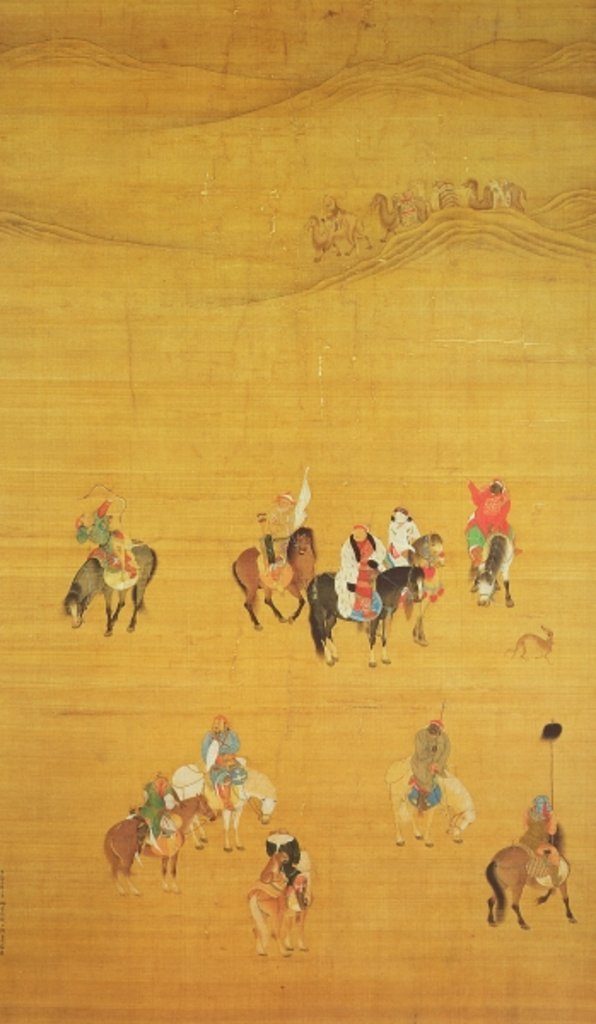
모리스 로사블리Morris Rossabli
Kublai Khan은 인구를 3개의 그룹으로 나누었고, 나중에는 4개의 그룹으로 나누었습니다. 우선 몽골인들이 우선이었고, 소위 "세무렌Semu ren" 또는 "색안" (위구르인, 터키인, 아랍인, 페르시아인, 퉁구트인 등)이 그 뒤를 따랐습니다. 세 번째는 중국 북방인 헨렌족과 키탄족, 주셔족, 그리고 고려인이었고, 네 번째는 남중국의 한족인 한렌족이었습니다. 이 네 그룹은 정치, 군사, 경제, 문화 분야에서 권리와 권력의 수준을 낮추는 것을 즐겼습니다. 물론 난렌Nanren은 다른 세 그룹보다 열등하다고 여겨집니다. 몽골인을 죽인 중국인은 사형에 처했고, 중국인을 죽인 몽골인은 전쟁터로 보내졌습니다.
위기
원나라를 멸망시키는 데는 여러 가지 요인이 있었지만, 중심은 논쟁의 여지가 없는 지도자가 없는 상황에서 유목민들이 죽을 때까지 자기들끼리 싸우는 경향이었습니다. 쿠빌라이 칸의 죽음 이후의 시기는 바이두Baidu 왕실에 대한 몽골의 끊임없는 반동으로 특징지어졌습니다. 부얀트 황제의 죽음 이후, 원나라의 황제는 이미 날이 얼마 남지 않은 남자들을 위한 일종의 환승역이 되었습니다.
적을 과소평가 하다.
하지만, 토모어Togoontomor는 대제국이 영원히 사라졌다고 생각하지 않았고, 결국 대제국을 회복시킬 것이라고 굳게 믿었습니다. 이것이 그가 만리장성의 수도인 카라코룸에 가지 않고 이창성에 정착하여 만리장성 북쪽 땅을 그의 남쪽 원나라로 선포한 이유입니다. 1370년에 죽기 전에, 그는 그의 아들 Ayuushriddar에게 왕위를 물려주었고, Daidu를 회복시키기 위해 그를 개선시켰습니다. 그러나 같은 해 명군은 공격을 감행했고 몽골군을 북쪽으로 더 밀어냈습니다. 칭기즈칸의 후손인 아우유슈리다르는 그의 위대한 조상이 세운 도시인 카라코룸으로 후퇴했습니다.
원나라의 멸망
역사는 빠르게 180도 변했고 이제 중국인들은 몽골인들을 공격하고 있었습니다. 1372년, 약 15,000명의 명나라 병사들이 몽골에 침입하여 격퇴당했습니다. 8년 후, 명나라의 또 다른 습격은 카라코룸을 폐허로 남겼습니다. 당시 왕위를 차지했던 토그스토모르 Togstomor는 그들의 파괴를 차단하고 중국인들이 몽골 영토 깊숙이 침입하는 것을 막기 위해 자신의 수도를 잉창Yingchang으로 옮기겠다는 묘안을 생각해 냈습니다. 하지만, 무인이 이끄는 130,000명의 중국군이 잉창Yingchang을 공격하여 도시를 평정했고, 거의 독스토모어를 점령했습니다. 1387년, 또 다른 전투가 묵덴Mukden 근처에서 일어났고, 그 후 몽골 장군 나가추Nagachuu는 20,000명의 군대와 함께 명나라에 합류했습니다.
이듬해 몽골의 마지막 칸인 토그스토모르가 사망하면서 쿠빌라이의 제국과 몽골 영토 내의 통일된 국가를 복원하기 위해 세운 남원 왕조는 물론 종말을 고했습니다.
버림받은 몽골족
토곤토모어가 몽골을 북상시키고 있다는 사실을 알게 된 밍타이즈는 중국에 있는 몽고인들이 거주지를 떠나는 것을 금지하는 칙령을 내렸습니다. 오늘날, 모국어와 문화를 더 이상 기억하지 못하지만 여전히 몽골족이라고 생각하는 일단의 사람들이 중국 윈난성Yunnan에 살고 있는 이유입니다. 그들은 토곤토모어Togoontomor가 버리고 명타이즈 Ming Taizu 천황에게 포로가 된 몽골인들의 후손입니다.

몽골의 투먼Tumen 오이라드의 투먼Tumen
이번에 몽골은 칭간Khinggan에서 텐거Tenger 산맥, 그리고 시베리아에서 만리장성에 이르는 영토를 지배했습니다. 원나라가 멸망한 후 이 넓은 땅은 몽골의 따앤 칸 때 투먼이라는 지역 정책이 나오면서 새롭게 편성이 된다., 그러니깐 동쪽에 6개 투먼 현재의 몽골과 내몽골 그리고 브리아트지역, 그리고 서쪽에 4개의 오리아트 투먼 현재의 중국의 서부와 중앙아시아로 나누어지게 됩니다,
따라서, 칭기즈칸의 통치하에, 알려진 세계의 거의 절반을 통합하기 위해 팽창했던 국가는, 그것이 시작된 바로 그 지점으로 되돌아갔습니다.
징기스칸 시대에는 40개의 투먼tumen이 있었던 반면, 위안 후기에는 4개 투먼tumen의 오리야트Oirad 외에도 3개의 오른 쪽right-hand 투먼이 있었고, 3개의 왼 쪽 left-hand 투먼이 있었습니다. 이전에, 모든 몽골 부족의 이름은 오리야트Oirad 부족과 함께 "44개의 투먼"이 있었지만, 지금은 몽골족 6개의 투먼과 오이라드족 4개의 투먼이었습니다.
연대순으로 정렬.
1295-1307: 올지토모르는 위안 왕위를 계승
1308-1311: 하이산훌레가 원나라 왕위를 계승
1312-1320: 부얀트 칸은 황제.
1324-1328: 예순토모는 황제.
1329: 허슬렌은 황제가 됩니다. 이 기간 동안, 몽골, 한국, 그리고 중국 군인들이 반란을 일으키다.
1329-1332: 토그스투머는 황제.
1331-1345: 토고와 다른 역사가들은 일라오, 진안 송 왕조의 역사를 집필 함.
1332: 렌친발이 중국을 지배.
1368년: 원나라의 멸망 명나라가 성립.
1370-1378: 빌레그트가 카라코룸에서 황제.
The Chinese called the Great Mongol Empire Da Chao, a direct translation of the Great Empire. Later they called their empire, ruled by a Mongol king, Da Yuan or Great Origin. The names of all Chinese dynasties originated from Chinese feudal province or geographical locations. Even the non-Chinese Kitans named their dynasty Liao, after Liao province, and the Jurchid named their dynasty after the Jin river. In 1271, Kublai Khan proudly gave his dynasty the name “Great Origin” which, for the first time in Chinese history, had no geographic reference.
Kublai’s Accomplishment
Kublai played a tremendous role in China’s history; in fact, he may have been one of the nation’s greatest emperors. He was, first of all, the one who had brought the disunited country under one rule. In 1280, he finally achieved victory over the Southern Song, ending a highly protracted war and creating a unified China. While using the ancient Chinese traditions of state administration in running the affairs of the United China, he was a statemen who introduced numerous new reforms. He successfully established centralized government machinery (Zhongshusheng) devised by Ye Lu Chucai. This major institution within his government was staffed entirely by Chinese, apart from a handful of “dismounted” Mongols, who held the few executive posts. This time there were sixty million Chinese while their Mongol rulers numbered a mere few hundred thousand.
Governance
Not only a region but everything else mixed in the land of the Yuan. Chinese lived side by side the Mongols, Koreans, Tibetans, Miao, Uighurs, and people of many other languages. While major Yuan laws were admixtures of Jin and traditional Chinese laws, other legislation, particularly the criminal code, were reflections of the Genghis Khan’s yasaq. Since the ruling Mongols and the subordinate Chinese were frequently unable to understand each other’s languages, they used Mongolian and Chinese simultaneously.
After one hundred years, when the Yuan Dynasty was nearing its end, there were very few Mongols who spoke Chinese or knew the Chinese script and even fewer Chinese who spoke Mongolian. State and court decisions were first made in Mongolian and later translated into Chinese. Due to a difference in language and culture, the Chinese translations of the decrees unsophisticated and primitive.
Kublai’s Successors
Toghon Temur, the last Yuan emperor, had no regard for the Chinese civilization and was even hostile toward it. This attitude may have provoked the rebellion and, furthermore, saved the Mongols from complete absorption into Chinese society.
After Kublai, his descendants Olziitomor (1295-1307), Haisanhuleg (1308-11), Buyant (1312-20), Gegeen (1321-24), Yesuntomor (1324-28) Huslen (1329), Tovtomor (1329-31), Renchinbal (1332), Rajibag (1333) and Togoontomor (1333-70) ruled China until the Han people began a rebellion in 1368 to reclaim their country and subsequently establish the Ming Dynasty, the Mongol Khans and princes were expelled back to the lands of their ancestors.
Morris Rossabli
Kublai Khan divided the population into three, and later four, groups. First in priority were the Mongols, followed by the so-called Semu ren or “the colored-eyes” (Western and Central Asians such as Uighurs, Turks, Arabs, Persians, and Tunguts, etc..). The third was the Henren or the Northern Chinese, as well as Kitans, Jurchers, and Koreans, while the fourth was Hanren, the Han of South China. These four groups enjoyed descending degrees of rights and powers in political, military, economic and cultural fields, with the Nanren, of course, considered inferior to the other three groups. A Chinese who killed a Mongol was put to death, while a Mongol who killed a Chinese was sent to war.
Chronology
- 1295-1307: Olziitomor succeeds in the Yuan throne.
- 1308-1311: Haisanhuleg succeeds in the Yuan throne.
- 1312-1320: Buyant Khan becomes emperor.
- 1324-1328: Yesuntomor becomes emperor.
- 1329: Huslen becomes Emperor. During this time, Mongol, Korean and Chinese soldiers started a revolt.
- 1329-1332: Togstumur becomes emperor.
- 1331-1345: Togtoh and other historians finish writing the History of the Ilao, Jin-an Song dynasties.
- 1332: Renchinbal rules China.
- 1368: The fall of the Yuan Dynasty The Ming Dynasty established.
- 1370-1378: Ayuushridar (Bilegt) becomes emperor in the Karakorum.
Crisis
Although many factors contributed to the downfall of the Yuan Dynasty, central was the tendency of the nomads to fight between themselves to the death in the absence of an undisputed leader. The period following the death of Kublai Khan was marked by constant revolts in Mongolia against the royal court in Baidu. Following the death of Emperor Buyant, the imperial throne of the Yuan became a sort of transit station for men whose days were already numbered. No sooner had a member of the golden lineage ascended the throne, that he would fall victim to the struggle unleashed by groups of power-hungry courtiers. Small wonder, then, that the widow of Togoontomor Khan flatly rejected having her beloved son Yantogs installed as Emperor at the suggestion of an influential official named Yan’tomor. In another incident, Togoontomor Khan’s own son Ayuushirdar was involved in a conspiracy plot to assassinate his father.
Underestimating the Enemy
Togoontomor, however, did not think that the great empire was forever lost, and firmly believed he would eventually recover it. This is why, instead of going to the Karakorum, the capital of the Great Khans, he settled down in the city of Yichang and proclaimed the land north of the Great Wall his southern Yuan kingdom. Before dying in 1370, he passed the throne to his son Ayuushriddar, improving him to recover Daidu. Bu that same year the Ming army launched an attack and pushed the Mongols further to the north. Ayuushridar, a descendant of Genghis Khan, retreated to the Karakorum, the city founded by his great ancestor.
The Fall of the Yuan Dynasty
History quickly made a 180-degree turn and now the Chinese were attacking the Mongols. In 1372, some 15,000 Ming soldiers made a foray into Mongolia and were repelled. Eight years later, another Ming raid left The Karakorum in ruins. In an effort to intercept their onslaughts and prevent the Chinese from breaking deep into Mongolian territory, Togstomor, who occupied the throne at that time, came up with the clever idea of moving his capital to Yingchang. However, 130,000 Chinese troops led by general Mu Yin attacked Yingchang and leveled the city, nearly capturing Togstomor himself. In 1387 another battle took place near Mukden, after which a Mongol general Nagachuu joined the Ming with his 20,000 troops.
This following year witnessed the death of Togstomor, the last Khan of all Mongolia, bringing to an end not only his Southern Yuan Dynasty, established in hopes of restoring Kublai’s empire but also the unified state within the Mongol territory.
The Abandoned Mongols
Having learned that Togoontomor was drawing his Mongols northwards, Ming Taizu issued an edict prohibiting the Mongols in China from leaving their places of residence. This is why, today, a group of people who no longer remember their native language and culture but who still consider themselves Mongols, live in China’s Yunnan province. They are the descendants of the Mongols abandoned by Togoontomor and held captive by Emperor Ming Taizu.
The Six Tumen of Mongols and Four Tumen of Oirad
This time the Mongols controlled a territory stretching from the Khinggan to the Tenger Mountains and from Siberia to the Great Wall. After the fall of the Yuan Dynasty, this vast lands came to be called Zurgaan Tumen Mongol, Dorvon Tumen Oirad- Six Tumen of the (Eastern) Mongols and the Four Tumen of the (Western) Oirads.
Thus, the nation which, under Genghis Khan, had expanded to incorporate nearly half of the known world, returned to exactly the point from which it had begun.
Whereas in the times of Genghis Khan there had been forty tumen, in the post-Yuan period there were three right-hand tumen, and three left-hand tumen, in addition to the four Oirad tumen. Previously, the name of the all Mongol tribes, together with those of the Oirad, had been “forty-four tumen”; the later coinage was six tumen of Mongols, and four tumen of Oirad.
'스탭핑 이야기들' 카테고리의 다른 글
| 몽골제국은 중국에 무엇을 남겼는가? (0) | 2021.03.18 |
|---|---|
| 몽골제국은 세계에 무엇을 남겼을까? (0) | 2021.03.17 |
| 쿠빌라이 칸 – 원나라의 설립자 (0) | 2021.03.04 |
| 훌레구 칸 – 무슬림 정복자 (0) | 2021.03.03 |
| 크리스천 in Mongol (0) | 2021.02.28 |


